

It was difficult to trudge through 2022 without feeling alarm at the way practical democracy is under attack. The most serious erosion of democratic practices was in the US, where tech tyrants linked arms and wallets with the US security apparatus to suppress news and views they didn’t like. The US media apparently doesn’t care too much about it: so much for the protections offered by the ‘fourth estate’.
How quickly and how far the US has fallen! No longer an inspiration, but now a cautionary tale in the active subversion of its own democracy. Who, if not the US, can those of us turn to, who continue to believe in democracy fed by open enquiry and the discovered value of truth?
But maybe we still have a chance, here in Britain. The auguries are poor, but the game is not yet lost.
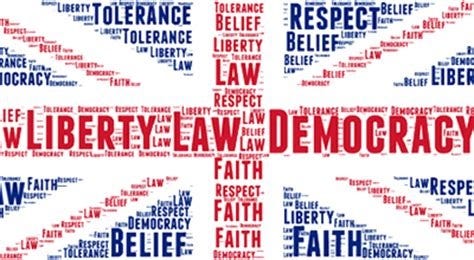
Britain, after all, managed a hugely contested democratic decision to leave the European Union, itself an ever-more overt conspiracy against democracy. The revelation of just how scoured and worn-out our native political landscape became under EU tutelage is truly horrifying. But at least our leaders can no longer evade responsibility.
There is no better place to understand the EU’s evasion of democracy than in Perry Anderson’s trilogy in the London Review of Books: ‘The European Coup’, ‘Ever Closer Union?’, and ‘The Breakaway’. This most comprehensive demolition of the EU’s democratic pretensions was published in a magazine whose core subscriber base is Liberal-Remainer North London. Read it and remind yourselves that for all our current failings, we have at least escaped that particular trap, even if we nearly had to gnaw our own leg off to escape.
Moreover, here in the UK, the tech tyrants at least got beaten back when PayPal decided to impose a funds-raid on the Free Speech Union. We got to see their real colours, and enough Britons decided they weren’t pretty that PayPal backed down. But boy, we’ve been warned. (Substack has not yet, to my knowledge, joined the tech-armed jihadis. Let us hope it continues to eschew political censorship in 2023.)
Nevertheless, things look blackly ugly for Britain’s democracy too. The way Britain got landed with the Sunak/Hunt government is a disgrace which historians will spend decades illuminating. I suspect the role of Andrew Bailey at the Bank of England - so strangely absent for days whilst the pensions sector which he used to regulate melted down - will feature greatly. I suspect that comparisons with way the ECB determined that democracy was too good for the Italians in 2011 will be made. Rightly.
However, a large part of the point of Brexit was to deny our politicians the ability to hide their inadequacies and failures behind a ‘Brussels made me do it’ set of excuses. The suspicion was that abnegating an ever-larger area of policy-making to a happily unaccountable bureaucracy had disarmed and spavined our political class. They were neither used to real power, nor increasingly wanted the responsibility that went with it.
As William Clouston has pointed out, in its place we got decades of political indifference, which by the end (now) left our political establishment barely even pretending to be concerned about the deterioration of much of the country’s fundamentals.
Now our spavined leaders, helped along by an indulgent and indifferent administrative staff, is exposed naked to our view. And what a dreadful sight it is, uglier than even the most pessimistic Brexiteer could have feared. Over almost the entire range of public policy, the decades of failure are revealed in their epic squalor. Health, education, housing, transport, energy, environment, immigration, productivity, wages . . . . .
This level of failure is a indictment to our political and administrative class on a truly historical scale. By which I mean, a hundred years hence our descendants will pore over the evidence and go ‘wtf?’ What is worse is that there seems no obvious way to correct or dislodge our administrative masters, to have done with them: the poison has been a long time amassing, and has travelled to virtually every organ. Still . . .
What Is To Be Done?
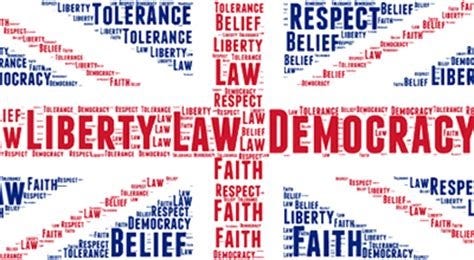
Where to start? How can we hope to reconstruct a useful politics, a useful administration? I have two initial recommendations:
First, don’t go down without a fight. Recently I suggested that Iggy Pop’s The Passenger could and should be understood as a song of democratic demonstration. I doubt he ever knew that he'd penned a protest song. But its swagger captures something it's so easy to forget, so easy to ignore, in our late-democratic society. I quote:
"And everything was made for you and me
All of it was made for you and me
It just belongs to you and me
So let's take a ride
See what's mine"
Never forget that: it was made for you and me, and it belongs to you and me, so lets take a ride and see what's mine!
How easy and comforting it is to forget it. But in a society which claims to be democratic, we citizens have a right and a responsibility to help shape the outcome. That’s right: to a certain degree I too am implicated in Jeremy Hunt being Chancellor of the Exchequer. Dreadful thought though it is. But to some extent we all share that responsibility, we all have democratic blood on our hands even if we just did nothing a let it happen.
In practical terms, that means embracing our inner Wayne Dixon: the ‘ordinary guy’ who decided that his huge hard-scrabble Leeds local ward was being badly served by the incumbent Labour Party. He stood for election and was rejected, he stood again and was rejected, and last year, finally, he was elected by a landslide in the 26k-strong constituency which the Yorkshire Post described as “one of the most shocking local election results the city has ever seen.” Wayne took responsibility and didn’t despair. Britain needs more people like him.
Second: be realistic, and admit that to get from where we are to effective responsible government, will take time and will demand compromise with a rotten system . We democrats have to learn to walk again before we can run the place. That means understanding that currently we are being governed by a government and establishment which has inherited imperial assumptions, methods and privileges which are now exercised only on the bulk of the British population.
The signs of the colonialist mentality of our current administration are all around us, and culminate in the indifference to actual outcome which has prevailed. But here are three:
The most obvious, the most egregious, are the Treasury’s Green Book protocols for public investment, which over decades have starved those living outside the South East of necessary investment. Diane Coyle and Marianne Sensier were never more perceptive than when they titled their seminal 2018/2019 examination of public procurement policy ‘The Imperial Treasury’. This remains the single most important paper on how Britain is (mis)governed of the recent past. What it describes is, truly, an intolerable disgrace.
The Barnett Formula, which guarantees Scotland levels of public spending far in excess of those in England (with the probably exception of London). This is nothing more nor less than a naked application of the imperial ‘divide and rule’ tactic. A country which could truly hold its government to account would have rectified this obvious and disgusting fiscal injustice decades ago. We didn’t.
‘London weighting’ for civil service jobs. Evidently, our administrative class feels no qualms about taxing people in parts of the country which can barely afford to visit London (hey, transport policy failure!) to pay their London-accommodation and lifestyle. No qualms - just pay up and smile, Hartlepool. Here we see the sneer of cold command from our colonial overlords.
We should not pretend we can overthrow our colonial administrators easily or quickly. We can, however, achieve results if, for now, we take it at face value, and demand they take their colonial role seriously.
Send in the Satraps
Those who administer empires have a familiar technique: they send out senior underlings to administer parts of their empire. Persian kings of kings sent out satraps; in India the British sent out colonial administrators to the regions; in China, today, Beijing dispatches cadres to the provinces as regional potentates. In each case, the deal is quite overt: to win favour at court, and to ensure imperial preferment, the satrap or regional secretary must first prove his ability at regional level. Only if he/she can prove themselves effective at dealing with local problems can they expect to be welcomed back at the imperial centre, and progress further. Failure at regional or provincial level stalls or ends your career.
We should adopt this system as a mandatory structure for any would-be high-flying civil servants. So, for example, any civil servant with ambitions in the Education Department would be dispatched to live and work in an area where educational achievement is notoriously lacking. Whether they made further progress in their career, and whether they might ever be welcomed back to Whitehall, would depend on the degree to which he/she could raise educational standards.
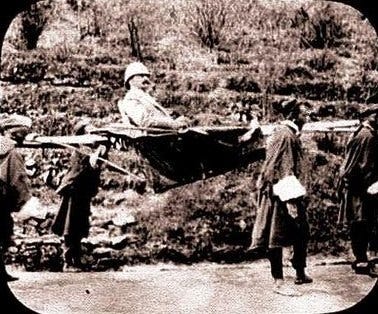
That would involve understanding the problem, and nurturing and rallying local, regional and national coalitions of talents and resources needed to get results. If the education satrap found the local political or administrative resources were not up to the task, he/she would have to find a way to fix the problem.
Meanwhile, he/she would also face competition from a rival education satrap in another region. The need for results would rule out any temptation to indifference.
No Shortcuts
I wish there was a democratic shortcut. However, the evidence is overwhelming that the size and complexity of Britain’s government cannot, at this stage, be genuinely controlled even by national democratic representatives.
Inventing a further level of devolved local government, far from improving governance and/or democratic oversight of this governance, would merely add a further layer of complexity, manned by political and administrative naives, which would entangle matters even more. Lines of accountability would be blurred further, lines of responsibility would be diffused even more, central government stasis would be entrenched, failure ignored and extended.
For now, ‘more local democracy’ would merely hand more power to the central bureaucrats who alone know how the system can be operated (if at all).
Rather, for now, the best hope for Britain’s democracy, and for Britain’s governance, is to demand clear lines of responsibility, clear lines of accountability within an establishment shrunk to clear the tangle of duplication and redundancy. Britain’s democracy needs a smaller state, because it needs a state which is accountable and which works. We don’t have it now.